In the modern dynamic world, parents keep seeking better ways of enhancing the learning and growth of their children. Learning has ceased to exist in classrooms, books, and exams. Learning has turned out to be an ongoing, real-life experience, which begins at home instead. This is where the active learning guide fparentips is significant in the contemporary parenting. It is aimed at assisting children in learning through doing, exploring, questioning and thinking by themselves.
Active learning promotes participation unlike in the traditional learning where the children can just listen and memorize. Children feel, see, test, and analyze what they feel. Consequently, learning will be meaningful and lasting. Further, they do not require specialized training or costly materials to adhere to this method by parents. Learning opportunities can be established anywhere with minor modifications in day to day practices.
What Is Active Learning and Why Parents Should Care
Active learning is a strategy in which children play an active role in learning as opposed to passively receiving the information. They pose questions, experiment, error and learn. Due to this interaction, children gain greater knowledge and confidence.
Active learning guide parentips The principle of the active learning concept is easy to understand: children learn better when they are interested and involved. As an example, counting, measuring and sequencing are naturally learned by the child when he or she assists in the kitchen. Likewise, when they are on the field, they discover nature, movement and social interaction. Such experiences are knowledge-building without any pressure.
How Active Learning Fits into Everyday Family Life
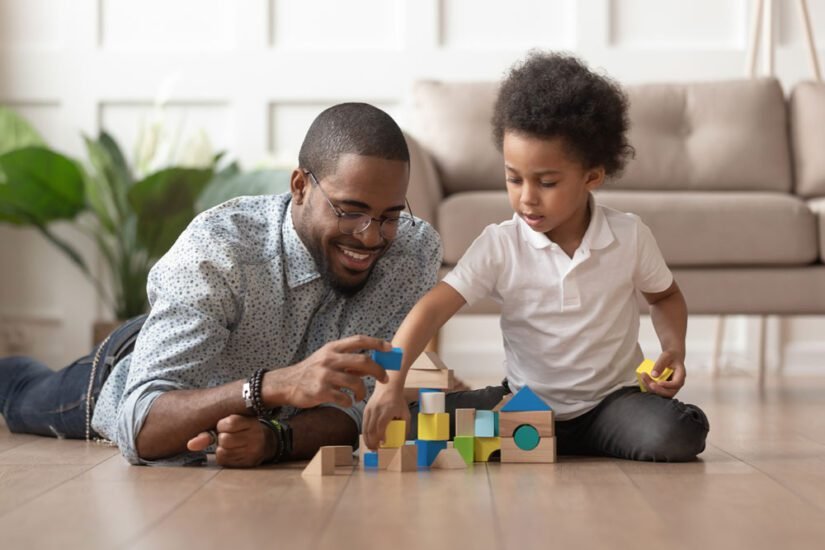
A lot of the parents should believe that learning entails special schedules or planned activities. Nevertheless, active learning is most effective when it is introduced into the everyday life. Active learning guide fparentips argues that even ordinary activities can easily be turned into learning activities provided that parents remain engaged and watchful.
As an example, grocery shopping may become a lesson in math and observation. Children are able to count objects, contrast prices, or recognise colors and shapes. On the same note, bedtime stories may elevate to a language building exercise where parents pose questions and request the children to guess what transpires next.
Moreover, daily dialogue is also very crucial. Parents should respond to why and how questions in a patient way, and this makes the children feel like they should think more. In the long run, this develops an interest and a sense of confidence. Parents merely direct exploration rather than being pushy.
Skills Children Develop Through Active Learning
Active learning helps in general growth and not only academic growth. By adhering to the rule of guide fparentips, parents can slowly develop the key skills in life because of the parenting principle of active learning.
To begin with, the communication skills are enhanced since children are trained on how to express ideas and questions. Second, problem solving skills are formed when children are challenged in spite of difficulties during playing or in their everyday chores. Third, emotional intelligence is developed when children learn to be patient, cooperate and control themselves.
In addition to this, creativity thrives when children are not constrained to any form of experimentation. They also get to learn that there may be many solutions rather than one. Children are, therefore, made more flexible and self-assured in new circumstances.
The Role of Parents in Active Learning
Active learning at home is based on parents. They do not have to perform like the teachers. They instead turn out to be facilitators who stimulate curiosity and lead to exploration. Active learning guide fparentips is based on active participation that is non-pressuring.
Parents can facilitate the learning process by being attentive listeners, posing open-ended questions and letting children experiment on their own. Parents must also react positively even in cases where errors occur. This mindset instills in children the fact that failure is an element of learning.
Balancing Screen Time and Active Learning
As early as 2026, digital devices will be inevitable. Nonetheless, too much screen time may lead to the loss of physical experiences. Fparentips is an active learning guide that says that balance is all that matters and not total restriction.
Educational content can be used by parents intelligently and thereafter relate it to the activities in the real world. To illustrate an example, parents can discuss the video the child watched about animals or they can see animals when they are walking. This relationship enhances comprehension.
Besides, boundary setting will assist children to establish healthy habits. Setting screen-free periods would promote creativity and exercise. Due to this, children remain active both mentally and physically.
Simple Active Learning Activities for Home
Creative learning is never about costly toys and complicated planning. The concepts communicated during the active learning shape fparentips principles that touch upon simplicity and consistency.
- Children can learn through cooking, cleaning, and gardening
- Drawing and household activities support learning
- These activities improve coordination and thinking skills
- Responsibility is developed naturally
- Learning becomes fun instead of stressful
- Hands-on engagement keeps children interested
- Focus should be on participation, not perfection
- Enjoyment matters more than flawless results
Simple exercises that are carefully made and supported can make an enduring impression even on a short basis.
Common Challenges Parents Face and Practical Solutions
Any family has difficulties in the process of new parenting strategies. There are children who lose their interests in a short time and others do not like new things. The strategy proposed by the active learning guide fparentips promotes flexibility.
Parents may reduce the duration of activities or convert the format in case the child is bored. In case of time constraint, learning may occur in minute things, including during meals or travel. It is all about pursuing the interest of the child and not coercing them.
Benefits of Active Learning for Long-Term Growth
The advantages of active learning are also important in the long run. Children are developed to think on their own and be able to change. The active learning strategies in which fparentips guide children to follow serve as a powerful foundation to their future life and education issues.
In addition, children who go through active learning tend to have a better emotional balance. They get to know how to deal with frustration and reward hard work. In the long run, these attributes make one successful both in academics and otherwise.
Active Learning vs Traditional Learning
| Aspect | Active Learning | Traditional Learning |
| Child’s Role | Participates actively | Listens passively |
| Learning Style | Hands-on and experiential | Memorization-based |
| Skill Development | Critical thinking and creativity | Limited problem-solving |
| Emotional Growth | Encouraged and supported | Often ignored |
| Parent Involvement | High and interactive | Minimal |
This comparison clearly shows why parents are shifting toward active learning approaches in 2026.
Why Active Learning Is the Future of Parenting
The dynamics that contemporary parenting demands is flexibility. The strategies outlined in active learning direct fparentips are in line with the existing educational studies and practical requirements. The needs of children now require skills which cannot be acquired in a rote fashion.
With society becoming complicated children need to be taught not what to think but how to think. Active learning will equip them with this fact by helping them to explore and be confident.
Conclusion
Active learning is not a fashion that will be forgotten. It is an effective method that helps to make normal situations significant lessons. Parents can facilitate the growth of their children with the assistance of an active learning guide fparentips which does not place pressure and stress on the children.
Parents can help to provide a supportive atmosphere in which learning seems natural by remaining engaged, posing questions, and motivating exploration. Curiosity, connection, and active participation in education will remain the core of the strongest education, beginning at home in 2026 and beyond.
Also Read About :- Why Instant-Decision Games